







The story
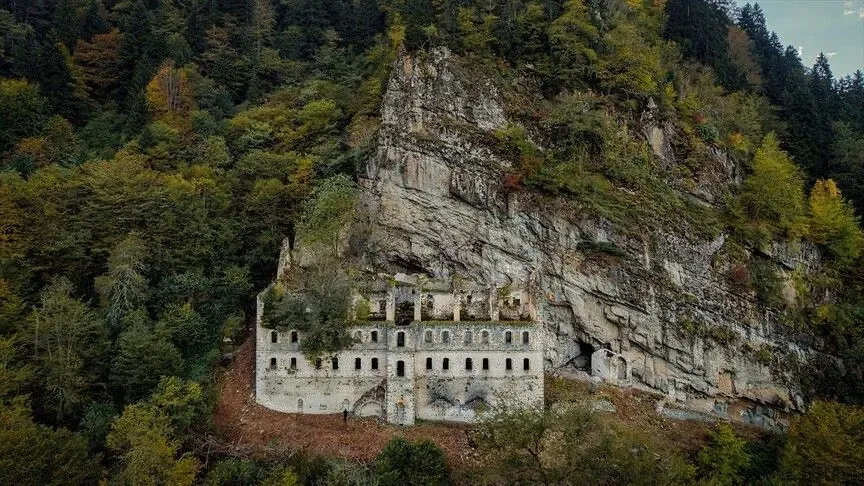
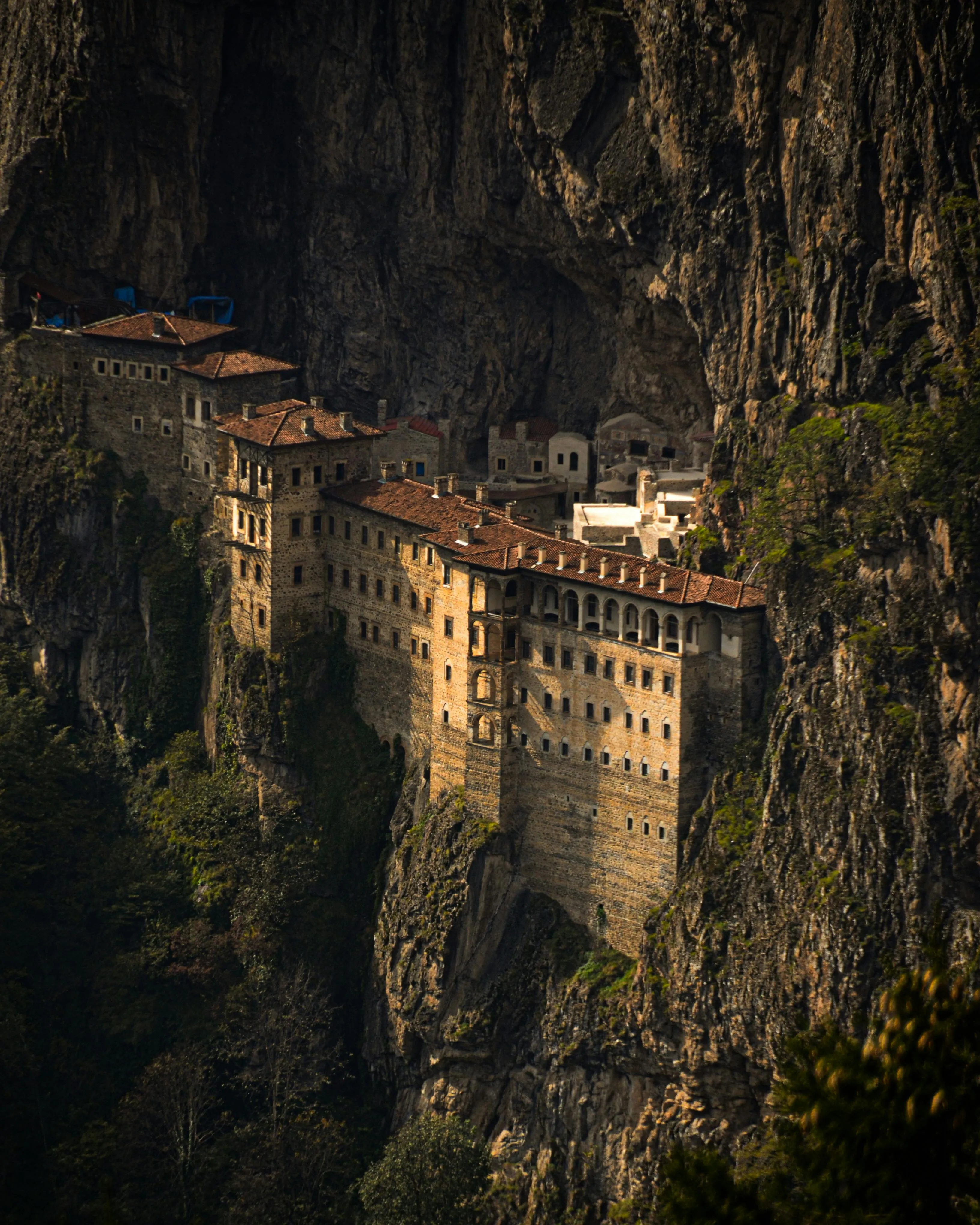
Sumela Monastery clings to a sheer cliff about 1,200 metres up, above the forested Altındere valley south of Trabzon. Tradition holds that it was founded in the late 4th century by two monks from Athens, Barnabas and Sophronios, who came to this remote spot with an icon of the Virgin Mary that was said to have been painted by Saint Luke. The Turkish Ministry of Culture dates the first foundation to around 385–386.
The monastery was enlarged in the 6th century under Emperor Justinian and reached much of its present form during the Empire of Trebizond. Emperor Alexios III, who reigned from 1349 to 1390, restored it and confirmed its privileges. After Sultan Mehmed II took Trabzon in 1461, the monastery came under Ottoman protection, and later sultans renewed its rights and gifts of land.
Sumela remained an active Greek Orthodox monastery until 1923, when the monks left during the population exchange between Greece and Turkey. A fire in 1930 destroyed its wooden parts. The most striking survivals are the painted walls of the Rock Church and its chapel, with layers of frescoes from different centuries, including work renewed in the 18th century.
Today the monastery lies within Altındere National Park and is on UNESCO's tentative list. After a major restoration it reopened to visitors in 2019. Since 2010, an Orthodox liturgy has been allowed each year on 15 August, the feast of the Dormition. Visitors climb a forest path to the entrance, then walk through the courtyard, the rock church and the terraces that hang over the valley.