








The story
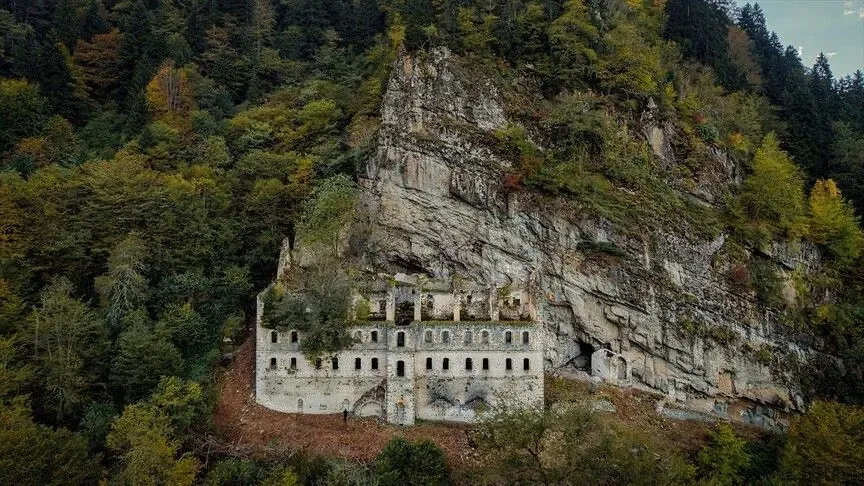
Vazelon Monastery, dedicated to Saint John the Baptist, lies in a pine forest in the mountains near Maçka, south of Trabzon. Its early history is uncertain: some researchers place its founding between 270 and 317, which would make it one of the oldest monasteries in the region. The Byzantine emperor Justinian is recorded as having restored it in 565.
The monastery was at its most influential during and after the time of the Empire of Trebizond. From the 13th century onwards it played a central part in the religious, cultural and economic life of the Maçka valleys, owning land and villages. Local tradition even says it was the richest monastery in the region. Its archive of documents, known as the Acts of Vazelon, recorded land sales, wills and village affairs over many centuries, and the parts that survive are a valuable source for the history of rural life in this area.
After the Ottoman conquest of 1461 the monastery continued its religious life. It was finally abandoned in the early 1920s, when its last residents left during the population exchange between Greece and Turkey.
Today Vazelon is a ruin, and its walls rise against the rock face among the trees. Treasure hunters and neglect have damaged it badly, but traces of frescoes can still be seen, including scenes of Heaven, Hell and the Last Judgement. It is a quiet place, best visited as a short walk in the forest and a contrast to the better-known Sumela.